Panruti Clay Dolls: Miniature Storytellers of Tamil Nadu


My grandmother often reminded me that she belonged to Panruti, a town in
Tamil Nadu renowned for its clay dolls. For her, these miniature figures were
not just ornaments for festivals—they were fragments of identity, reminders of
stories and rituals that shaped her childhood. Each doll carried the warmth of
community life, echoing voices of myth, folklore, and rural imagination. To me,
knowing that my grandmother’s roots lay in this tradition makes the craft feel
like an inheritance—an echo of her voice, passed down in clay.
The Craft
In the quiet lanes of Panruti, artisans shape stories out of earth.
Their hands, seasoned by generations of practice, mold clay into miniature
figures that are sun-dried and painted in vibrant hues. The dolls depict gods
and goddesses, village couples, animals, birds, and the iconic Chettiar
couple—symbols of prosperity and abundance. Unlike polished factory toys,
Panruti dolls retain a rustic charm. Their slightly uneven contours and bold
brushstrokes embody the folk aesthetic, balancing simplicity with expressive
detail.
Festival Connection
These dolls come alive during Navratri Golu/Kolu, when households
across Tamil Nadu arrange them in tiered displays. The dolls narrate epics,
celebrate everyday life, and invite children into a world where mythology and
folklore become tangible. For artisans, this season is both a spiritual
offering and a livelihood, as demand peaks during the festival months. The act
of arranging dolls is itself a ritual—tier upon tier becomes a stage where
miniature storytellers silently enact the rhythms of devotion and community.
Cultural Resonance
Panruti dolls are not just festival ornaments. They embody the
continuity of oral tradition, teaching values through silent presence. Much
like puppetry, they are miniature storytellers—silent yet eloquent. Their
themes echo the rhythms of rural life, reminding us of ecological and emotional
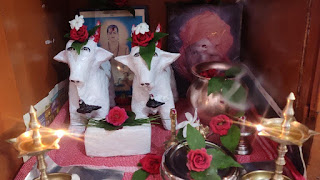
ties between community and craft. A clay cow, a farmer couple, or a goddess
figure becomes a teaching tool, a way for children to absorb stories without
words.
Heritage Identity
While Vilachery in Madurai and Kosapettai in Chennai are also known for
doll-making, Panruti’s creations stand apart for their earthy intimacy. They
are smaller, often golden-hued, and deeply rooted in local imagination.
Together, these traditions form a mosaic of Tamil Nadu’s intangible cultural
heritage. Panruti dolls, in particular, reflect the intimacy of village
life—each figure a humble yet profound reminder of how art springs from soil
and spirit.
Why They Matter Today
In an age of mass production, Panruti clay dolls remind us of the value
of handcraft. They are sustainable, community-driven, and emotionally resonant.
Supporting these artisans is not only about preserving a craft—it is about
nurturing the stories that clay continues to tell. Each doll is a vessel of
continuity, carrying forward ecological wisdom, cultural memory, and the
artistry of hands that refuse to be forgotten.
Closing Reflection
Panruti clay dolls are miniature storytellers of Tamil Nadu. They speak
without words, yet their silence is eloquent. They remind us that heritage is
not only preserved in museums or archives—it lives in the hands of artisans, in
the rituals of households, and in the memories of grandmothers who pass down
stories through clay.
Each Panruti doll is more than clay—it is a memory molded, a story
preserved, and a heritage that continues to breathe through the hands of its
makers.



Comments