Posts

Showing posts with the label Folklore

Folk art forms of Storytelling
Image
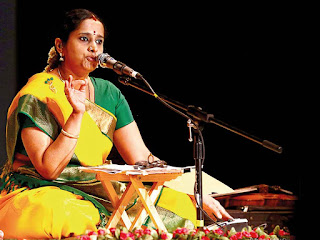
 I have always been fascinated by listening to stories right from my childhood.  It is still a question that remains unanswered that was I felt comfortable in the company of old people and listening to them or vice versa. This listening to older generations in a way made me attracted to the art of listening and eventually to the art of storytelling. Somehow, I was rapt into listening to the storytelling unknowingly I was introduced to this beautiful art form which is quite popular today. I had a rare opportunity to listen to stories of 'Sri Renuka Devi' from 'Joggamma' and 'Joggappa' of the 'Jogini' cult. Again annually the 'Ganga-Gowri' storytellers would visit and recite the story of two consorts and their fight over the rightful claim of Almighty Shiva. They would carry the Ganga and Gowri idols in caned baskets and hang shoulder bags asking for alms after reciting the story. The enactment would be wonderful to watch as the logical arguments w...

Puppetry: Mother of All Folk Arts

Image
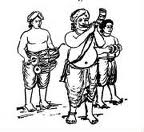
Puppetry progenitor of the modern dramatic art, dates back to 2000 BC. It exists in all regions of the world like the Egyptians, Greeks, and some sections of the American continents. The role of puppets in spiritual and magical remedies has been part of it.  Besides ancient India, China, and Babylon. Puppetry in Asia is a traditional form and is the mother of all folk art forms.  The etymology of Puppetry can be traced from the Old French  ‘Poupette’, which is faring from the word ‘poupée’ meaning "a bird" or ‘a little doll’. Likewise, in Vulgar Latin root ‘Puppa’-meaning a chick or a doll. Likewise, in vulgar Latin root ‘Puppa-meaning a chick or a doll. This was adopted in Middle English in the 1530s as ‘Popet’-“Doll”. This adapted in Middle English in the  1530s as  ‘Popet’- "doll". "Doll moved by strings or wires". Again, this is the opinion of many historians and scientists who think that toys and dolls are the ancestors of the puppet. As Puppe...

A Rare Story Telling using Clay Toys in Telangana - "Mandahechchu" Community

Image
Telanagna is a rich state in India with diverse folk arts and oral narratives. One such being the "MANDAHECHCHU"-oral form of storytelling of Shepard hero "KATAMRAJU", for "YADAVA COMMUNITY".   Yadavas   are the "Gollas"  basically cattle and sheep breeders. They narrate the story of their ancestors and also about the origin of their community-as part of oral history. They are called by different synonymy names like "Mandapichollu" or " Mandichulu" and even "Bommalata   vallu ". By and large they are mendicants belong to a Yadava-Golla community, but are known by different names across the region of Andhra Pradesh. Mandhechuor Mandahechchu again a sub sect or community of Buduga Jangama Community of artists. They narrate the story of "KATAMRAJU" known as "YADAVA PURANA" and receive alms/ donations from Golla community members. For narration of the story they use different  "CLAY TOYS...

Disappearing Folk art of Telangana

Image
Disappearing Folk art of Telangana Sarada Kala Rupam- Oral Narrative Folk Art Form of Telangana Region Introduction: One of the distinctive folk art forms of Telangana region is ‘Sarada’ art form popularly known as Sarada Kala Rupam. ‘Sarada’ is synonymous for Goddess Saraswati. ‘Sarada’ is the string instrument used by these folk artists in ballads. By playing sarada string instrument these balladeers- story narrators or in simple words story tellers narrate nearly seventy stories in song form. As these balladeers use Sarada string instruments, they are known as ‘Sarada Ganalu’.                   Here is the picture of Saradagallu from Mehaboobnagar, Telangana State. In some regions they are also known as ‘Jangam-storyteller’. This is because; as per researches, it is still not very clear to which caste these Sarada balladeers belong to, they are considered as a sub caste of Schedule Caste (SC) community. Again, sarada caste is...