Kaisika Ekadasi: The Sacred Power of Eighteen Promises
A Cosmic Prelude
Long ago, the earth was submerged in water. To rescue Her, Lord Sriman Narayana assumed the form of Varaha, the mighty boar, and plunged into the muddy depths, lifting the earth back into safety. Yet Sri Bhoomi Piratti, the presiding deity of the earth, was deeply troubled. She worried for Her children, bound in worldly suffering. Seeking deliverance for them, She asked the Lord for a path (Upaya). Narayana, holding Her tenderly on His lap, narrated the story of Nampaduvan in the village of Thirukkurungudi near Thirunelveli, assuring Her that salvation lies in singing His glory — Gana Rupa Upayam. The Kaisika Purana is the 48th chapter of the Varaha Purana and is traditionally referred to as “Kaisika Mahatyam”. The term “Kaishika Pann” denotes a tradition of singing hymns dedicated to the Almighty, set to a specific style of recitation accompanied by music. Similarly, there is a practice known as Naivalam, which is noted in Thirumangai Alwar’s pasurams.


The Tale of Nampaduvan and the Brahma Rakshasa
On the bright fortnight Dwadasi of the
month of Krittika, Nampaduvan, a humble devotee, set out to the temple
to sing hymns in the Kaisika raga. On his way, he was confronted by a
starving Brahma Rakshasa, cursed to wander in ghostly torment. Nampaduvan,
steadfast in devotion, was ready to surrender his body, believing that death
would free him to reach the Lord. Yet he pleaded for time to fulfill his vow of
singing. The Rakshasa refused, doubting his return. To prove his sincerity,
Nampaduvan made 18 solemn oaths, invoking the gravest sins should he
fail to return:
The Eighteen Oaths of Nampaduvan
- If I do not return as per my promise, let me get the sin of a man
who is a liar.
- Let me get the sin of a person who commits adultery, if I don’t
return.
- While eating in the company of a person, if a man differentiates in
menu (serving inferior food to the guest), he gets a great sin. Let me get
that sin, if I don’t return.
- If a man donates a piece of land to a Brahmin and takes it back
later, he accrues sin. Let me get that sin, if I don’t return.
- If a man enjoys the company of a woman during her youth and rejects
her when she becomes old, he accrues sin. Let me get that sin, if I don’t
return.
- Having performed ablution rites (Tharpanam) on Amavasya day and
then having physical relationship with his wife the same day, he accrues
sin. Let me get that sin, if I don’t return.
- Having dined delicious dishes in the house of a host and then
abusing the host, he accrues sin. Let me get that sin, if I don’t return.
- A man who promises to give his daughter in marriage but breaks his
word accrues sin. Let me get that sin, if I don’t return.
- A man who eats without bathing on Shashti, Ashtami, Chaturdashi, or
Amavasya accrues sin. Let me get that sin, if I don’t return.
- A man who promises to donate something but fails to keep his word
accrues sin. Let me get that sin, if I don’t return.
- If a person tries to allure the wife of a friend who has helped
him, he accrues sin. Let me get that sin, if I don’t return.
- If a person, afflicted by lust, enjoys the company of his revered
teacher’s wife or the wife of a king, he accrues sin. Let me suffer that
sin, if I don’t return.
- A man who marries two women but favors one over the other accrues
sin. Let me get that sin, if I don’t return.
- If a man divorces his chaste wife who has no one to care for her,
he accrues sin. Let me be equated to him, if I don’t return.
- If a man obstructs thirsty cattle from drinking water, he accrues
sin. Let me get that sin, if I don’t return.
- Killing a Brahmin, addiction to liquor, stealing gold, breaking a
vow — these are heinous crimes. Let me suffer all these punishments, if I
fail to return.
- If some people worship only other deities and not Sri Vasudeva,
they accrue sin. Let me get that sin, if I don’t return.
- Sriman Narayana is the supreme deity, the inner soul of all beings. If a man equates Him with other angels bound by karma, he will be born again and again. Let me get that sin, if I break my promise.
Although these oaths remain the same, their acceptance and adherence differ today from the belief system of the period of Nampaduvan.
It was this 18th oath that convinced
the Rakshasa, for it was considered the greatest sin of all. The number 18
itself carries sacred weight — the 18 chapters of the Bhagavad Gita, the
18 Puranas, the 18-day Kurukshetra war. In this tradition,
eighteen represents completeness, the totality of dharma and cosmic truth.
The Vigil
and Return
Nampaduvan sang through the night, keeping
vigil as prescribed for Ekadasi. At dawn, he surrendered to the Lord and
hurried back to the Rakshasa, his heart filled with joy at keeping his promise.
On the way, he was stopped by a stranger who warned him against returning to a
cruel cannibal. But Nampaduvan, resolute, refused to break his word. The
stranger was none other than Sri Varaha Himself, testing his devotion.
The Liberation of the Rakshasa
Nampaduvan offered his body, but the Rakshasa,
recalling his past life, refused. He revealed that he was once a Brahmin named Somasarma,
who had erred gravely during a sacrifice and was cursed into Rakshasa form.
Moved by Nampaduvan’s devotion, the Rakshasa
begged for the merit of his songs. Nampaduvan sternly refused, but out of
compassion granted him the merit of one hymn sung in the Kaisika raga.
That single hymn liberated the Rakshasa, who was reborn into a Vaishnava family
and ultimately attained Vaikunta.
Rituals and Living Tradition
- Fasting and Vigil:
Devotees observe a fast and stay awake through the night, singing hymns of
Vishnu.
- Recitation of Kaisika Purana: On
Dwadasi morning, the Purana is recited, weaving together narrative, music,
and devotion.
- Temple Tradition: At Thirukkurungudi,
the episode is read aloud with Sanskrit shlokas and Tamil commentary by Sri
Parasara Bhattar, and enacted on stage.
- Living Lineage: I
gathered this narrative after listening to Sri Vaishnava Sampradaya
Vedantic discourses by Shri U. Ve Komandur Elayavalli T. Rangarajan
Swamy and Sri U. Ve M.A. Venkata Krishnan Swamy, who recited
the Kaisika Mahatmyam with devotion and clarity.
Lessons from Kaisika Puranam
- Truth as devotion:
Nampaduvan’s 18 oaths show that keeping one’s word is sacred.
- Art as prayer: A
single hymn in the Kaisika raga carried the power of liberation.
- Caste is no barrier:
Though a Chandala, Nampaduvan’s devotion elevated him above social
divisions, while Somasarma, a Brahmin, fell into Rakshasa form through
negligence.
- Inclusivity in bhakti: The
soul’s devotion, not its birth, determines its closeness to the divine.
- Avoiding Bhaagavata Apachara:
Disrespecting devotees of the Lord is considered a grave offence.
Our Acharyas equate Nampaduvan with Vishwamitra,
Sri Vishnuchitta, and ThondarAdiPodi Azhwar, all of whom sang divine songs
to awaken the Lord. Sri Varaha Himself showered affection on Nampaduvan,
calling him “My Singer.”


Kaisika Ekadasi Celebrations Across Temples
• Srirangam:
The festival features a grand procession of Namperumal, followed by the
recitation of the Kaisika Puranam and rituals like Asthanam. Devotees gather in
large numbers to witness the deity adorned in special attire.
• Tirumala:
The rare procession of Ugra Srinivasa Murthy takes place in the early hours of
Kaisika Dwadasi, accompanied by rituals and the reading of the Purana.
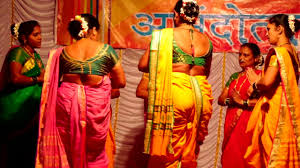
• Tirukkunkudi: The celebration uniquely reenacts the story of Nampaduvan, dramatizing his vows and devotion, making the myth a living performance tradition. The annual Kaisika Puranam natakam (play) performed at the Nambi temple, dramatizing Nampaduvan’s encounter with the Rakshasa.
A Poetic Closing
From the cosmic rescue of the earth to the
humble song of Nampaduvan, Kaisika Ekadasi whispers a timeless lesson:
salvation is not found in grandeur but in sincerity. A single hymn, sung with
truth, can transform suffering into liberation.
The number 18, woven into this story,
reminds us of completeness — the fullness of dharma, the totality of promise,
the bridge between mortal devotion and divine grace.
Let us remember: caste belongs to the body,
not the soul. Devotion, truth, and renunciation elevate one to the highest
order. In honoring Nampaduvan, we honor the power of song, the sanctity of
promise, and the inclusivity of bhakti.




Comments