Garba: The Womb of Devotion and the Dance of the Divine
Garba, the
soul-stirring circular dance of Gujarat, is far more than festive rhythm—it is
a living ritual, a celebration of Shakti, and a symbolic enactment of life’s
eternal cycle.
Etymology and Symbolism
The word Garba stems from the Sanskrit Garbha,
meaning womb—the source of life, the vessel of creation. At the centre
of every Garba performance lies the Garbha Deep, a lamp placed inside a
perforated earthen pot. This lamp is no ordinary light—it represents the unmoving
divine, the eternal soul, surrounded by the ever-turning wheel of
time.
“The dancers revolve, but the lamp remains
still—like the soul untouched by the dance of life and death.”
The circular formation of Garba dancers
mirrors the cyclinal nature of existence: birth, death, and rebirth. It
is a visual mantra, a moving mandala, where the goddess is both the centre and
the circumference.
“As the rings of dancers revolve, the Goddess
remains the still centre—the eternal constant in a changing universe.”
Ritual and Devotion
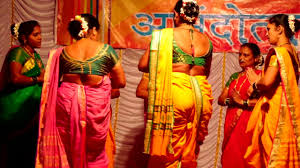
Garba is performed during Navratri, the
nine nights dedicated to the worship of Durga in her many forms—Amba,
Bhavani, Kali, Lakshmi, Sarasvati. Each night, devotees gather in concentric
circles, dancing in reverence around the lamp or image of the goddess.
- The dance begins after the Aarti, when the divine has been
invoked and the space sanctified.
- The movements are graceful yet grounded, symbolizing surrender,
celebration, and spiritual alignment.
- Garba is not choreographed—it is collective intuition, a
shared pulse of devotion.
In traditional settings, Garba was performed
by women as a fertility ritual , invoking blessings for family, harvest,
and harmony. Today, it is a community-wide celebration, open to all, yet
still rooted in its sacred origins.
Dandiya
Raas: The Dance of Divine Battle
Often paired with Garba is Dandiya Raas,
a stylized mock-battle using sticks (dandiyas) that represent Durga’s
weapons in her fight against the demon Mahishasura. While Garba is circular
and meditative, Dandiya is dynamic and dramatic—an enactment of cosmic
conflict and triumph.
- The clashing of sticks symbolizes the duality of life—light
and dark, good and evil, creation and destruction.
- It is also a communal retelling of the Devi Mahatmya, where
the goddess slays the demon and restores dharma.
Though some link Dandiya to Krishna’s Raas
Leela, in the context of Navratri, it is Durga's valor that is
celebrated.
Community and Celebration
- Traditionally, Garba was a village ritual, where
everyone—young and old—participated in honoring the goddess.
- Today, it’s a vibrant social and spiritual event, blending folk
music, colorful attire, and collective joy.
- The dance has evolved to include Dandiya Raas, symbolizing
Durga’s battle against Mahishasura, with sticks representing her weapons.
Cultural Resonance
- Garba celebrates womanhood, fertility, and inner divinity—making
it a powerful pedagogic tool for classrooms and family rituals.
- It has inspired plays, dramas, and miniature theatre, and
continues to evolve through fusion with modern music and choreography.
Garbha speaks to the power of visual rhythm,
cinematic appeal, and the evolving landscape of devotional expression. Garba’s
rise beyond Gujarat is not accidental; it’s a blend of aesthetic magnetism,
media amplification, and urban adaptability that’s reshaping how India
celebrates Navratri.
Why Garba Is Spreading Beyond Gujarat
1. Visual
Spectacle and Cinematic Appeal
- Garba’s vibrant costumes synchronized circular movements,
and energetic beats make it a natural fit for film and stage.
- Bollywood and regional cinema have embraced Garba for its dramatic
flair and emotional resonance, turning it into a national
symbol of festive joy.
- Films like Goliyon Ki Raasleela Ram-Leela and countless
Navratri-themed music videos have made Garba aspirational and glamorous.
2. Pan-Indian
Urban Identity
- Cities like Bangalore, Hyderabad, Delhi, and Kolkata now
host massive Garba nights during Navratri, often in IT parks, college
campuses, and cultural venues.
- These events are inclusive, drawing people from all
backgrounds—not just Gujaratis—and often blending Garba with DJ music,
fusion choreography, and social networking.
- In cosmopolitan spaces, Garba becomes a neutral, festive
language that transcends regional boundaries.
3. Diaspora
and Globalization
- Garba has become a diaspora ritual, celebrated in London,
Toronto, and New Jersey as a way to stay connected to Indian roots.
- Its portability and adaptability make it ideal for community
halls, stadiums, and cultural festivals abroad.
Why It’s Overshadowing Regional Dances Like Kollattam
1. Media
Visibility
- Garba has benefited from massive media coverage, celebrity
endorsements, and high-profile events.
- Kollattam, though deeply symbolic and rhythmic, remains localized
and underrepresented in mainstream media.
2. Urban
Adaptability
- Garba’s circular format and group dynamics are easy to scale for
large urban gatherings.
- Kollattam, with its stick choreography and regional lyrics,
often requires specific cultural context and smaller group
intimacy, making it harder to adapt to pan-Indian or global stages.
3. Fusion
and Flexibility
- Garba has evolved into fusion formats —with DJs, remixes, and
Bollywood choreography—while Kollattam remains more rooted in tradition,
which is beautiful but less commercially amplified.
Conclusion:
Circles of Light, Threads of Memory
In the heart of Gujarat, as the monsoon
retreats and the air turns festive, a sacred rhythm awakens. Circles of dancers’
whirl around a glowing lamp, their feet echoing ancient prayers, their
movements tracing cosmic truths. This is Garba—not merely a dance, but a
living ritual, a celebration of Shakti, and a symbolic enactment of life’s
eternal cycle.
Garba may
have spun its way across India and into global consciousness, but its true
power lies not in spectacle alone—it lies in its ability to center the divine,
to gather communities in rhythmic surrender, and to remind us that the womb of
creation is also the lamp of liberation.
As Garba
grows, let us not forget the quieter dances—like Kollattam, with its intimate
stick rhythms and lyrical devotion. These regional forms carry ancestral
memory, local myth, and emotional nuance that deserve celebration, not erasure.
In
classrooms, courtyards, and cultural spaces, may we dance not just to dazzle,
but to remember, reclaim, and reimagine. Whether it’s the lamp at the center or
the stick in hand, every gesture can be a prayer, every rhythm a story waiting
to be retold.





Comments